Let kids be kids
Let kids be kids
Let kids be kids, because children are explorers. Every situation is a learning experience or a time to experiment. As parents and caregivers, one of our major responsibilities is to promote and encourage our children’s inquisitive nature as they are our next innovators and problem solvers.
Accordingly, Early Childhood Education Centre’s (ECE) provide a great environment for our children to explore and find things that they are passionate about, in this video, we provide key considerations when looking for an ECE. Consider Pacific Based ECE’s
Script – Let kids be kids
Kids are sources of chaos and disorder, they are scientists who are wired to explore, by picking up a rock to see what’s underneath, to pulling apart a toy to see how it works, to helping mum cook to see how the ingredients turn into tasty plate of food, kids are wired to explore.
Everything is new to children, everything is an adventure, and every situation is a time for learning and experimenting, as parents and caregivers our responsibility is to encourage and promote the inquisitive nature of our children, do not kill their natural curiosity by wanting to keep a clean house or stopping them from jump into a puddle, or stopping them from making noise because an adult scientist are kids who have not yet grown up.
They invent things, they solve problems, they make the world a better place.
Observing the Sabbath
Observing the Sabbath – Tonga
Pacific children are often raised upon Christian values and principles, so observing the Sabbath on a Sunday is a common practice – including in Tonga, where the Constitution states that Sunday, the Sabbath day, is to be “kept holy”.
In this short video, Mele and her mum talk about how the Sabbath has been observed in Tonga and what it means for children living outside of Tonga.

5 Tongan Cultural and Language Videos
- The Lords Prayer in Tongan. Little Mele stands up in front of her class and recites the lords prayer in Tongan.
- I am Tongan. Tevita talks about the country he loves, Tonga !
- Common Tongan Words – Common Tongan words that you can use everyday !
- Common Tongan Phrases – Increase your Tongan language by incorporating Tongan phrases into your everyday conversations
- Tongan words for Items found around the house – Learning new words can be fun, so here are common items found around the house like plate, cup, fridge and more.
Script
Mum, why don’t we do anything on a Sunday, not even cleaning, washing clothes, mowing the lawns or anything,
When we grew up in Tonga, me and your dad, all we did on a Sunday was go to falelotu (church) with our family and have a umu afterwards, we couldn’t swim, fish, or even play outside.
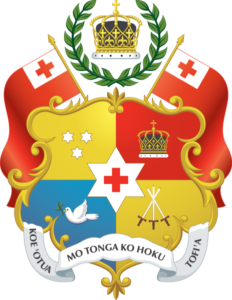
You remember our Tongan coat of arms ?, “Otua mo Tonga hoku Tofi’a which means God and Tonga are my inheritance.
So in 1839, King George Tupou I made a declaration that dedicated the land and the people of Tonga to God.
So to make sure we observed the Sabbath as a Holy day, Tonga wrote it in its constitution, this means that shops close and only essential work is allowed like hospitals and the police.
Did you know, Tonga is the only country in the world that has these rules.
Now in New Zealand, we don’t have these rules, that’s why you see all the shops open, people working, its pretty much like any other day.
But as Tongans, we try to protect our cultural values, practices and religious beliefs because these things or traditions are important to us as a people.
Do I have to follow all of these rules too when I get older?
When you get older Mele, you might decide to work or do things with your friends, and that’s alright.
What matter most is that your relationship with God, your family, culture and identity remain strong.
Tapa Cloth Design Elements
Tapa cloth design
History of Tapa Cloth Designs
Siapo, also known as tapa, is one of the oldest Pacific cultural art forms. For centuries, Tapa cloth designs have illustrated the Pacific environment along with the Pacific way of life.
At Pacific Learners, we love producing videos that highlight different cultures and customs.
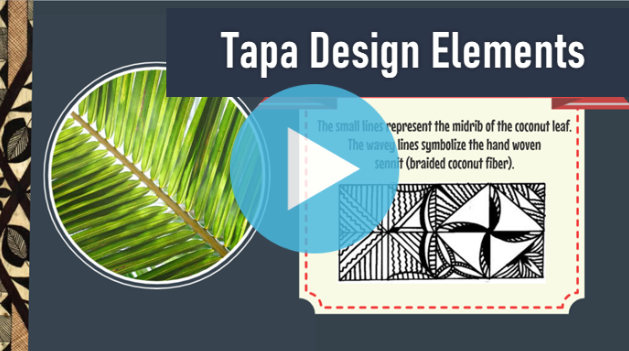
The design elements or patterns that are used are typical of plants, animals, insects and other items that you might find around a Pacific village, so the designs are interesting, for example: The Tuslil’I are small lines or wavy lines. The small lines represent the midrib of the coconut leaf. The wavey lines symbolize the hand woven sennit which is the braided coconut fiber.
The Fa’a tumoa / fa’a moa fai or Banana pod is used in two ways, the closed or unbloomed banana pod …… or the blooming pod with its petals open.
In this short video, we highlight a range of common tapa design elements, and the origins behind them.
If you are interested in more cultural videos, head over to our Videos Page and click the CULTURE tab, if you want to learn more about Siapo designs click here.
5 facts you might not know about TAPA cloth
- Tapa cloth is made from bark that has been softened through a process of oaking a beating.
- Take was invented as early as the sixth century B.C, tress of the Moraceae family was used.
- Tapa cloth originated from Polynesia.
- Tapa can range from a few hundred to over $20,000, depending on size, design and quality.
- While tapa cloth is most often recognized as a Polynesian craft, it has also been made in South America, Indonesia, New Guinea, Melanesia, and parts of Africa
Supporting our children through stress
As we navigate through the uncertainty of the COVID-19 pandemic, our children can get stressed, worried and anxious. It is perfectly normal for our children to feel this way, and it is our responsibility as parents, caregivers and our community to provide assurance and support.
At Pacific Learners, we are committed to providing content that supports our young children. A Māori Whakataukī says ‘Poipoia te kākano kia puāwai’ which means ‘Nurture the seed and it will bloom’
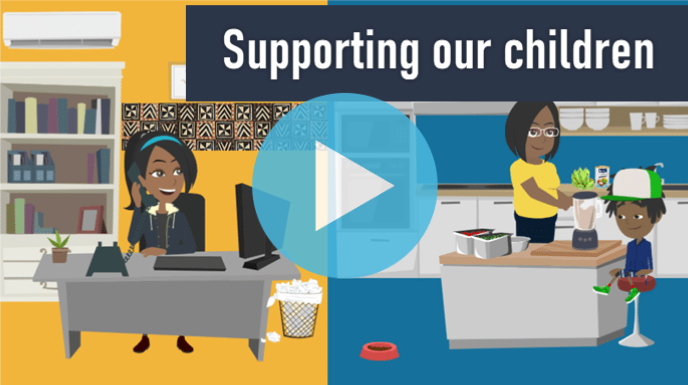
Supporting our children through this period of uncertainty is one of the most important things we can do. In this video, Mrs. Ioane makes a point of calling young Sione who has failed to participate in the class zoom sessions, she takes to opportunity to provide he class some simple ways of coping with stress.
In this video, we highlight 5 practical steps of coping with stress
- Understanding it is normal to worry, and the things that worry us don’t last
- Talk to someone about what you are worried about, they maybe able to support you while you are going through a stressful time
- Be active, and do things that you enjoy
- Try and be positive, eat and sleep well
- Turn being worried into something that motivates you
Introduction to STEAM Learning
STEAM learning is beginning to play a significant role in our children’s development. By combining science, technology, engineering, the arts and mathematics, our children start to develop different ways of thinking which ultimately equip our children for future employment as well as our next generation of inventors and business owners.
STEAM learning allows for flexibility in the development of their methods of reasoning, problem solving, and creativity.
At Pacific Learners, our aim is to address the social, cultural and educational needs of our Pacific children, we do this through providing entertaining and informative videos which children can watch and learn from. To encourage our children to engage and participate in STEAM learning, we will be releasing 12 STEAM-related videos over the next 12 months.
To keep up to date with STEAM related videos, you can now access our STEAM Resources page, this is where all our STEAM content is kept.
Common Fijian Phrases
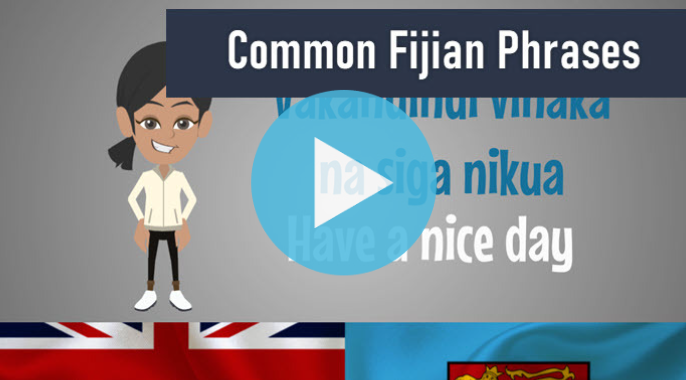
In our efforts to revitalise Pacific Language, we are very happy to bring you ‘Common Fijian Phrases’.
In this video, you can learn common Fijian phrases that you can use everyday, phrases like ‘How are you’? or ‘What is the time’?
By blending common Fijian words and common Fijian phrases, we can then begin to take a more advanced approach and learn about sentence structure. Lets all grow in confidence as we continue to learn the Fijian language journey together.
For more Fijian videos and images, you can visit our Fijian Language Resources Page.
If you are interested in learning Fijian words ?, click the link here: Common Fijian Words
Here are 5 Common Fijian Phrases
How are you?
Bulabuka vinaka tiko?
Where are you from?
Iko kai ve?
That is good!
Qori e vanaka
Pleased to meet you!
Au marau niu sotavi iko!
No Problem
Sega na leqa
Common Fijian Words
Common Fijian Words
Have you ever wanted to learn common Fijian words like ‘thank you’ or ‘excuse me’? Well, you have come to the right place. Learn common Fijian words that you can use everyday.
Bula! Pacific Learners is excited to bring you its first Fijian language video featuring common Fijian words and Fijian numbers.
Our passion is to revitalise Pacific Languages. We do this by continuing to release language videos and images that help you become familiar with basic words, phrases, numbers and letters as well as incorporate songs and stories.
One of the most effective ways to learn another language is to incorporate basic words into your everyday conversations, so use the word ‘yadra vinaka’ instead of ‘good morning’ or ‘vosota’ instead of ‘sorry’.
5 common Fijian words – among many others
1. Thank you in Fijian
Vinaka
2. Good morning in Fijian
Yadra Vinaka
3. Good night in Fijian
Moce Mada
4. Please in Fijian
Kerekere
5. Excuse me in Fijian
Tolou
Keep the learning going. We have other Fijian language videos that you can use to improve your Fijian language speaking ability.
- Also learn some common Fijian phrases that you can use everyday
Common Fijian Words
Io – Yes
Sega – No
Kerekere – Please
Vosota – Sorry
Tulou – Excuse me
Vinaka – Thank you
Moce Mada – Goodnight
Yadra Vinaka – Good Morning
Bula – Hello
Kana – Eat
Moce – Sleep
Lako Mai – Come
Lako – Go
Tekivu – Start
Oti – Finish
Gunu – Drink
Via kana – Hungry
Fijian Numbers
Dua – One
Rua – Two
Tolu – Three
Va – Four
Lima – Five
Ono – Six
Vitu – Seven
Walu – Eight
Ciwa – Nine
Tini – Ten
Common Cook Island Phrases
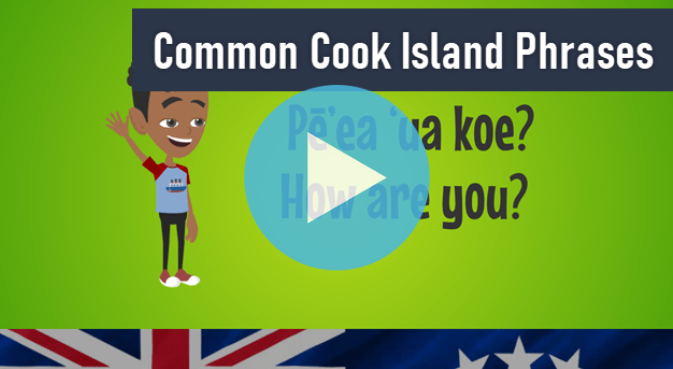
Pacific Learners is very happy to bring you our second Cook Island language video. In this video, you will learn common Cook Island phrases that you can use everyday.
At Pacific Learners, we are passionate about promoting Pacific Language, especially with our young tamariki. Cultural identity allows our young Pacific Learners to be confident in who they are.
In this video, you will phrases like ‘how are you?’, or ‘come and eat’ and many more, so by integrating our ‘Common Cook Island Words‘ video with Common Phrases, you will be well on your journey to becoming a confident Cook Island speaker.
Cook Island Prayer
Ka pure tātou – Let us pray
‘Ē to mātou Metua i runga i te rangi teitei – Our heavenly father
Te pati atu nei mātou i tā’au ‘akameitaki’anga i teia ‘epetoma. – We ask for your blessings this week
Ki runga ‘ia mātou tātakita’i – To each and every one of us
Na roto i te ingoa o Iesu i pure atu ei mātou. – In Jesus name we pray
‘Āmene – Amen
A Prayer for Tonga
A Prayer for Tonga
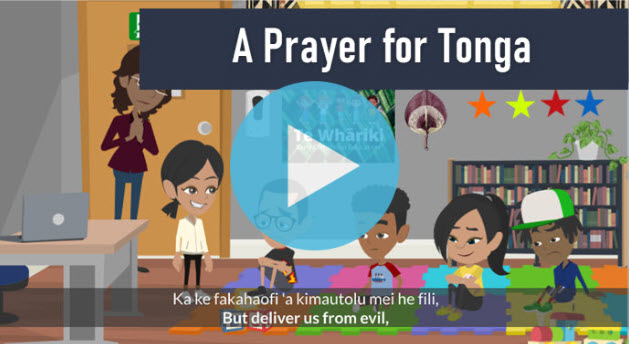
Our prayers and thoughts are with the People of Tonga as they deal with the impact of the volcano eruption. With the affects of the volcano eruption and devastation, we offer a prayer for Tonga, a prayer of strength, protection and calm to the People of Tonga.
At Pacific Learners, we have contributors who are Tongan, and our thoughts and prayers are also with those who reside outside of Tonga.
The eruption caused tsunamis in Tonga, Fiji, American Samoa, Vanuatu, and along the Pacific rim, including damaging tsunamis in New Zealand, Japan, the United States, the Russian Far East, Chile, and Peru. For more information click here.
In this video, Mele says the Lords Prayer.


Recent Comments