
Common Kiribati Words
Learning common Kiribati words is a great way to start you on your Kiribati Language journey.
At Pacific Learners, we are passionate about revitalising Pacific Language, so we are very happy to bring you the first video in our series of Kiribati Language videos. We have also made it easy for you to access all our Kiribati video content by creating a Kiribati Language Resource Page.
In this video you will learn words like ‘Eang’ which mean ‘Yes’ or ‘Tiaki’ which means ‘No’. You can even learn words like ‘ko rabwa’ which means ‘Thankyou’ and even impress you parents or children by saying ‘Matu raoi’ which means ‘goodnight’.
In this video, you will also learn how to count to 10 in Kiribati.
How to count to 10 in Kiribati
One – Teuana
Two – Uoua
Three – Tenua
Four – Aua
Five – Nimaua
Six – Onoua
Seven – Itua
Eight – Wanua
Nine – Ruaiua
Ten – Tebwina
Renewable Energy – STEAM Education
Renewable Energy
(STEAM)
Science – Technology – Engineering – Arts – Mathematics
Pacific Learners is excited to bring you the first video in a series focusing on STEAM Learning. (Science, Technology, Engineering, Arts, Mathematics)
STEAM Learning allows our children to create different perspectives on the world by using critical thinking, problem solving, communication and reflection.
At Pacific Learners, our focus is to ignite the passion of our young Pacific Learners in the areas of STEAM subjects. The first video touches on renewable energy with key Tongan translations. Renewable energy is often referred to as ‘Clean Energy’ because it comes from natural sources that constantly replenishes itself.
To improve the access to STEAM Learning, we have put together a STEAM Learning Resource page, with a collection of images and STEAM video content.
4 examples of renewable energy systems
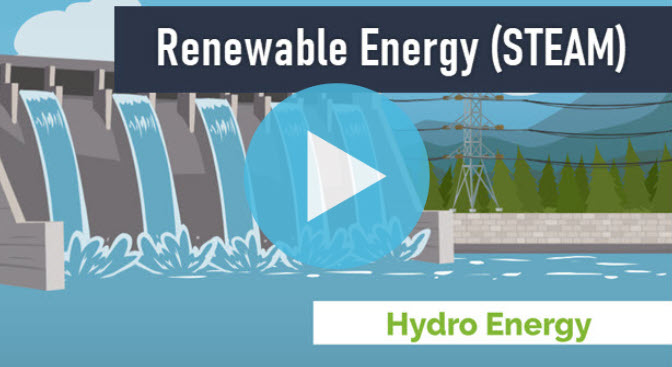
- Hydropower – harnessing the power of flowing water
- Solar energy – Capturing the energy of the suns rays and turning it into usable energy
- Geothermal energy – Capturing heat generated from the earth
- Wind energy – harnessing the power of wind to generate electricity
Tongan words for Energy Systems
Energy – Ivi mo’ui
Water – Vai
Wind – Matangi
Sun – La’ā
Thermal – Vai vela
Electricity – ‘Uhila
Environment – Ngaahi me’a ‘oku tu’u takatakai pe kāpui kitautolu
Common Cook Island Words
In our Pacific Language video series, we are very happy to bring you our first Cook Island language video. In this video, you will learn common Cook Island words that you can use in everyday conversations.
At Pacific Learners, our passion is to see Pacific Language flourish, so saying ‘Hello’ in Cook Island is as easy as saying ‘Kia orāna’, or saying ‘Aere Mai is as easy as saying ‘Come’.
Use this video as the foundation upon which you, your students, or your children can better engage and understand the language of the beautiful Cook Islands.
5 Simple Cook Islands words you will learn in this video – among many others
1. Hello in Cook Island
Kia orāna
2. Good morning in Cook Island
Pōpongi meitaki
3. Drink in Cook Island
Inu
4. Hungry in Cook Island
Pongi
5. Go in Cook Island
‘Aere
Once you become familiar with these common Cook Island words, have a go at our next video, Common Cook Island Phrases !
Simple Cook Island Prayer:
Ka pure tātou – Let us pray
‘Ē to mātou Metua i runga i te rangi teitei – Our heavenly father
Te pati atu nei mātou i tā’au ‘akameitaki’anga i teia ‘epetoma. – We ask for your blessings this week
Ki runga ‘ia mātou tātakita’i – To each and every one of us
Na roto i te ingoa o Iesu i pure atu ei mātou. – In Jesus name we pray
‘Āmene – Amen
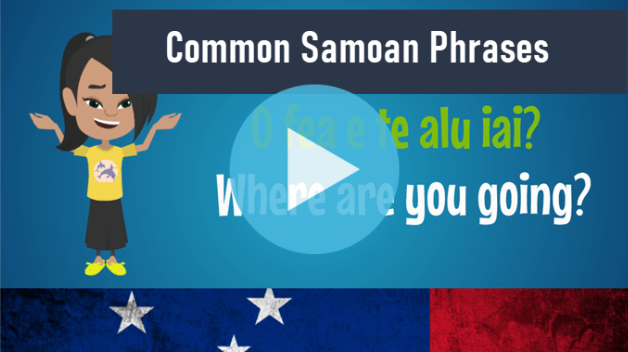
Common Samoan Phrases
Learning common Samoan phrases is a great way to become familiar with the third most spoken language in New Zealand.
At Pacific Learners, we are dedicated to revitalising Pacific Languages, so we have a dedicated Samoan Language Resource Page that will help you on your Samoan Language journey. You will find images, language and cultural videos.
By incorporating Samoan phrases into your everyday conversations, you can say things like ‘O fea e te sau ai?, which means ‘Where are your from?’ or ‘Fa’afetai ua ta feiloai’ which means ‘Pleased to meet you’
5 Simple Samoan Phrases you will learn – among others
1. How are you, in Samoan
Oa mai oe?
2. I am good thankyou, in Samoan
Manuia fa’afetai
3. What is the time ? , in Samoan
Ua ta le fia ?
4. How much is this, in Samoan ?
E fia le tau ?
5. Don’t worry about it, in Samoan ?
Aua popole
Common Samoan Words
Common Samoan Words
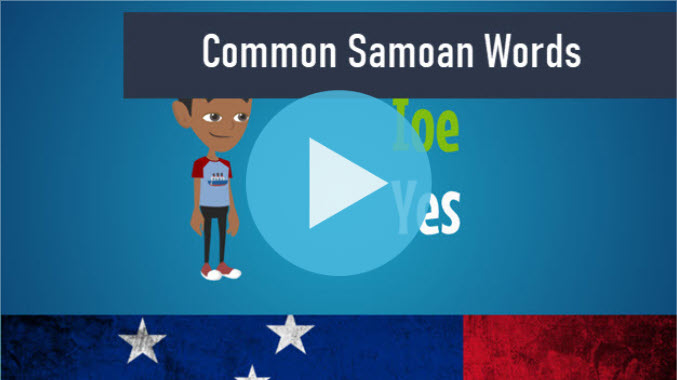
Ever wondered how to say ‘hello’ in Samoan? What about ‘please’? In this video, the children’s kaiako teaches the class some Common Samoan words and numbers.
Talofa! Pacific Learners is happy to bring you a new instalment of our series of animated video episodes, introducing you to the Samoan language.
In this video, kaiako Mrs Ioane teaches the class basic Samoan words, like ‘alu’ (go), and numbers, from ‘tasi’ to ‘sefulu’.
As part of our goal to revitalise Pacific languages, we have produced this video as a helpful resource introducing you to basic Samoan vocabulary. Try to incorporate these common Samoan words into your everyday life, allowing the language to flourish. For example, instead of saying ‘please’ , give ‘fa’amolemole’ a try.
Use this video as the foundation upon which you, your students, or your children can better engage and understand the language of Samoa – Aotearoa New Zealand’s third-most-spoken language.
5 Common Samoan Words you will learn in this video
1. Hello in Samoan
Talofa
2. Please in Samoan
Fa’amolemole
3. Have a nice day in Samoan
Lanuia le aso
4. Yes in Samoan
Ioe
5. No in Samoan
Leai
Keep the learning going by watching our series of educational and cultural videos:
- Common Samoan Phrases. Learn how to ask questions such as ‘How are you?’ in Samoan
- Samoan Words for Shapes and Colours. Learn Samoan words for 10 colours and 10 shapes
Common Samoan Words
- Ioe: Yes
- Leai: No
- Fa’amolemole: Please
- Manuia le po: Goodnight
- Manuia le taeao: Good morning
- Talofa: Hello
- ‘Ai: Eat
- Moe: Sleep
- Sau: Come
- Alu: Go
- Ma’ea: Finish
- Inu: Drink
- Fia ai: Hungry
Samoan Numbers
- Tasi: One
- Lua: Two
- Tolu: Three
- Fā: Four
- Lima: Five
- Ono: Six
- Fitu: Seven
- Valu: Eight
- Iva: Nine
- Sefulu: Ten
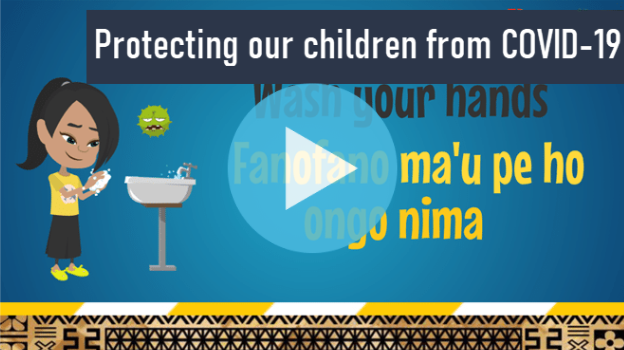
Protecting our children from COVID-19
COVID-19 has affected our Pacific families and communities. Here are a few simple things our children can do to help protect themselves and those around them from the virus. Video with Tongan translations.
Building Identity through Culture
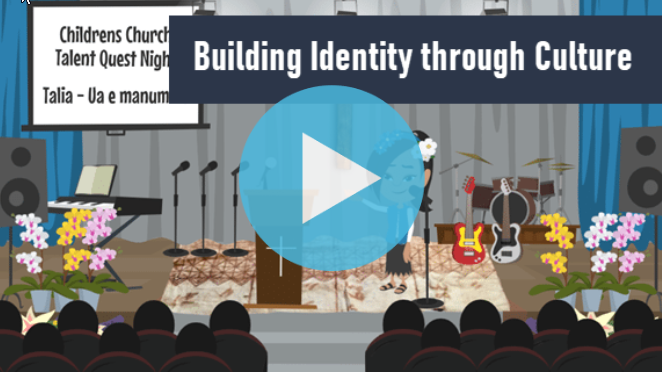
Building identity through culture means investing time and effort into our children. Raising children with values that reflect traditions, love, relationship, sharing, respect and family means our children become valued contributors to our Pacific Community.
In this video Talia sings Ua e manumalo, a song that she has been learning at church.
At Pacific Learners, we are passionate about producing cultural content across all Pacific cultures. In another video, Talia sings a song that is special to her, listen to Talia sing Le ‘Aute.
Ua e manumalo – Lyrics
Ieova lo’u Atua la’u pese i le po,
lou faamaoni, lou agalelei Tama, lo’u lea malosi.
CHORUS
Ua e manumalo, ua e manumalo,
ou te mafaia mea uma, ua e manumalo
Ieova e te a’oa’o o’u lima i le taua, lou lava aao
taumatau Tama taofiina a’u
Ua e manumalo, ua e manumalo, ou te mafaia mea uma, ua e manumalo
Song courtesy of Peace Chapel
Tongan words for items around the house
Improve your Tongan Language by learning Tongan words for items found around the house.
Mālō e lelei, in this video you will learn words like ‘helu’ which means ‘comb’ or ‘Peleti’ which means ‘plate’ and many more, these words can be used in everyday conversations.
At Pacific Learners, our passion is it to revitalise Pacific Language, we do this through producing animated videos and images. We have also put together a dedicated Tongan Language Resource Page, this is where you can find all our Tongan content in one place.
Videos like this are a great resource for Tongan language weeks, teachers, families and individuals.
3 Tongan Language videos you might find useful
- Common Tongan Words – In this video you will learn basic Tongan words
- Common Tongan Phrases – In this video you will learn common Tongan Phrases you will learn everyday such as ‘What is your name?’ or ‘Have a nice day’
- Tongan words or shapes and colours – In this video you will learn 10 Tongan words for shapes and 10 Tongan words for colours
Tongan Common Phrases
Have you ever wanted to learn common Tongan phrases like ‘where are you going?’ or ‘what is the time?’
In this video, you can learn some basic Tongan phrases that you can use and incorporate into everyday conversations.
Malo e lelei! Pacific Learners is delighted to continue our series of animated videos focused on increasing your knowledge of the beautiful Tongan language.
At Pacific Learners, one of our main goals is to revitalise Pacific Languages. We do this by continuing to release language videos and images that help you become familiar with basic words, phrases, numbers and letters as well as songs and stories.
To grow and develop in the Tongan language, incorporate Tongan phrases – so instead of saying ‘what is the time?‘ give ‘koe ha e taimi?‘ a try. Or if someone asks ‘how are you?’ you can say ‘sai pe malo’ instead of ‘good, thank you’.
5 simple Tongan phrases you will learn in this video – among many others:
1. How are you? in Tongan
Fefe hake?
2. What is your name? in Tongan
Ko hai ho hingoa?
3. Where are you from? in Tongan
Ko ho’o ha’u mei fe?
4. I am at home in Tongan
‘Oku ou ‘i ‘api
5. Have a nice day in Tongan
Ma’u ha ‘aho lelei
Keep the learning going! We have many Tongan language videos and images that can help you in your everyday Tongan language journey. You can also view all our Tongan Language and Cultural videos by visiting our Tongan Language Resource Page.
- Common Tongan Words. Start off with the basics by learning common Tongan words that you can use very day
- I am Tongan. Learn more about the Tongan culture. Little Tevita talks about the country he loves.
Tongan common phrases
Ha’u ‘o kai – Come and eat.
Koe ha e taimi? – What is the time?
Fefe hake? – How are you?
Sai pe malo – Good thank you
‘Alu ‘o sio TV – Go and watch TV
Ko hai ho hingoa? – What’s your name?
Ko ho’o ha’u mei fe? – Where are you from?
‘Alu ki fē? – Where are you going?
Mohe ā – Good night
Mālō ‘etau lava ki he pongipongí ni – Good morning
‘Oku ou ‘i ‘api – I am at home
Fiefia ke toe feiloaki mo koe – Pleased to meet you
Ma’u ha ‘aho lelei – Have a nice day
‘Oku ‘ikai mahino – I don’t understand
‘Oku fiha e? – How much is this?
‘Oku ou lea faka-tonga si’isi’i pe – I speak a little Tongan
Sai pē ‘oua e tokanga kiai – Don’t worry about it
‘Ofa atu – Love you
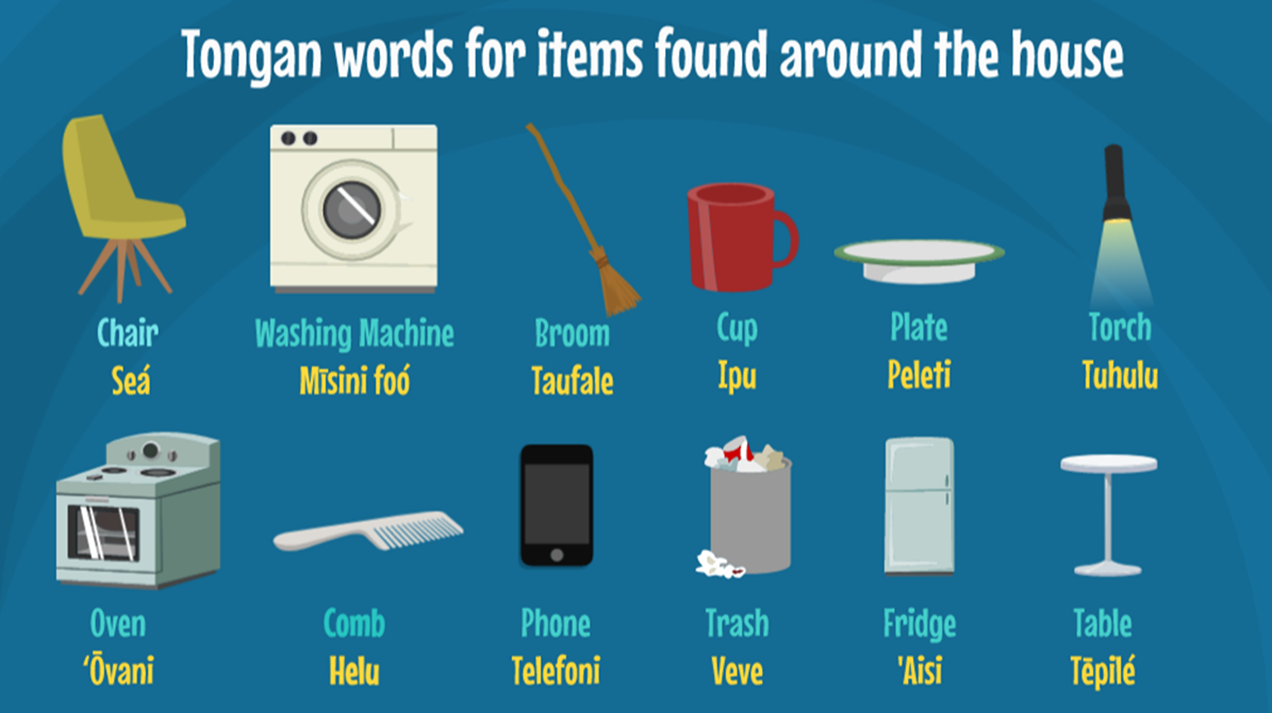
Also check out our Tongan words for ‘items found around the house’ graphic.


Recent Comments