Learn 16 Tongan Sporting Words for Everyday Conversations
In this Tongan Language video, we introduce you to 16 useful Tongan sporting words that you can easily use in everyday conversations. Whether you’re just starting your Tongan language journey or looking to expand your vocabulary, these words are a fun and practical way to connect with the language.
You’ll learn words like:
Lele – Run
Pulu – Ball
Puna – Jump
…and many more that are commonly used in both casual and formal contexts.
Incorporating these Tongan words into your daily conversations can help you grow more confident in the Tongan language, impress your friends and family, and stay connected to your culture. Keep learning by watching more of our Tongan Language videos and take your language skills to the next level!
Here are the 16 Tongan Sporting words used in the video.
Why Pacific Children Should Learn their Pacific Language
Why Learning their Pacific Language Matters for Young Pacific Learners
For young Pacific learners in Aotearoa New Zealand, learning their heritage language offers lifelong benefits that go far beyond communication. Speaking a Pacific language strengthens identity and belonging, helping children feel proud of who they are and where they come from. It deepens connections with parents, grandparents, and wider communities, keeping cultural traditions alive across generations. Research also shows that bilingual children often develop stronger cognitive skills, improved problem-solving abilities, and greater confidence in their learning. At Pacific Learners, we create engaging, animated resources to support Niuean, Tokelauan, Cook Islands Māori, and other Pacific languages, making it easier for families, schools, and communities to pass on the richness of their culture to the next generation.
1. Pacific Language Preserves Culture and Identity
Pacific languages hold centuries of history, traditions, and knowledge. When children learn their native tongue, they gain a deeper understanding of their culture, values, and ancestors. Language connects them to their roots, ensuring that customs, stories, and songs are passed down for generations
2. Strengthening Family and Community Bonds
Language is a bridge that connects children to their elders and community. When young Pacific children speak their Pacific language, they can communicate with grandparents, understand traditional wisdom, and participate in cultural ceremonies with confidence. This strengthens family ties and fosters a sense of belonging.
3. Boosting Cognitive and Academic Benefits
Research shows that bilingual children often develop stronger cognitive skills, problem-solving abilities, and academic success. Learning a Pacific language alongside English enhances brain development, improves memory, and even supports better literacy skills in both languages.
4. Pacific Language Builds Confidence and Pride
When children see their language valued at home, in schools, and in digital media, they develop a strong sense of pride in who they are. Knowing their Pacific language helps them feel confident in their identity and encourages them to embrace their cultural uniqueness in an increasingly globalized world.
5. Ensuring Language Survival
Many Pacific languages are at risk of being lost due to migration, globalization, and generational language shifts. Teaching young children their Pacific language ensures that it remains alive, vibrant, and relevant for future generations. By speaking and using the language daily, they become the next guardians of their cultural heritage.
Conclusion
Learning a Pacific language is a powerful gift that provides lifelong benefits. It strengthens identity, deepens cultural connections, and supports cognitive development. As parents, educators, and communities, we must continue to create spaces where young Pacific children can learn, speak, and celebrate their language with pride.
By investing in language learning today, we ensure that Pacific cultures and identities thrive for generations to come. 🌺
At Pacific Learners Education, we are passionate about providing Pacific content that supports our children’s cultural and spiritual journey. Below we have translated one of the most well known scriptures in the Bible, the Lord’s Prayer, from English to Niuean.
In our latest Niuean Language Video, we give you ‘Niuean words for family’.
In this video you can learn words like ‘hoana’ which means ‘wife’, or ‘tau mamatua’ which means ‘parents’, and many more.
A great way to learn a language is to take common words you use in every day conversations and replace them with the language you are learning. This means it builds repetition and familiarity so the words are used without thinking.
Enhance your Niuean language skills with these 20 common Niuean words that you can easily incorporate into your daily conversations! Whether you’re a beginner or looking to deepen your connection with Niuean culture, these common words are a great place to start.
For instance, learn “Nofo” (which means “sit”), “Laka” (“walk”), and “Fakaalofa” (“love”). By integrating these everyday words into your routine, you’ll not only improve your vocabulary but also build greater familiarity with the language.
Additionally, practicing these words regularly will help you become more comfortable using them in everyday situations. Want to take your learning even further? For more Niuean language videos you can visit our Niuean Language Resource Page.
Start your journey today and make Niuean a part of your everyday routine!
Here are 5 Niuean words that you can use every day
Ready to deepen your connection to the Niuean culture and language? Whether you’re just starting out or looking to expand your vocabulary, learning common Niuean phrases is a powerful way to boost your fluency and confidence.
In this resource, we’ve gathered everyday Niuean expressions that you can use in real conversations with family, friends, or during your next visit to Niue. From greetings and questions to expressions of gratitude and common responses, these phrases will help you sound more natural and connected to the language.
You can learn common Niuean phrases like ‘Fakaalofa lahi au kia koe’ which means ‘I love you’, or ‘Kua hoko e magaaho ke fano ke mohe’ which means ‘It’s time for bed’ and many more.
Repetition is key to learning any language, so use these useful Niuean phrases is everyday conversations.
Start on your Niuean language journey by learning Niuean words for items at the supermarket!
Learn words like ‘Huhu‘ which means ‘Milk’, ‘Moa‘ which means ‘Chicken’, or even ‘Vai koukou ulu‘ which means ‘Shampoo’ and many more. Try and use some of these words in your everyday conversations with family and friends.
A great way to learn a language is to become familiar with words you can use everyday, so next time you walk around the supermarket try and remember as many Niuean words as you can.
Here are some Niuean words for items at the supermarket
Huhu means Milk Siisi means Cheese Falaoa means Bread Tau fua moa means Eggs Pata means Butter Mena kai Poa means Meat Ika means Fish Moa means Chicken Tau fua apala means Apples Siliolo means Cereal Tau fua moli means Oranges Tau fua futi means Bananas Vai koukou ulu means Shampoo Vai kana nifo means Toothpaste Tau paka keke means Biscuits Tau fi sipi means Chippies Sokalete means Chocolate
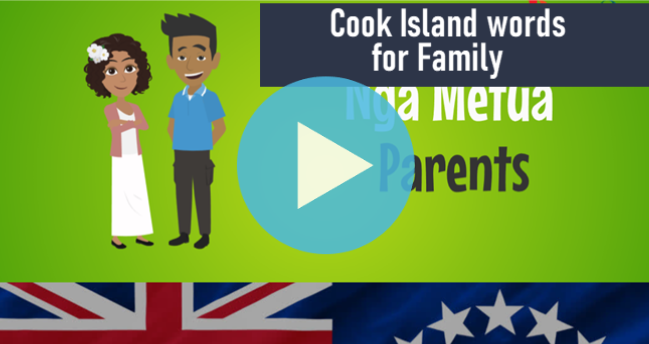
In our latest Cook Island language video, we bring you ‘Cook Island words for family’.
You can learn words like ‘Metuavaine’ which means ‘Mother’ or ‘Akametua Tane’ which means ‘Uncle’ and many more. Learning basic Cook Island words and phrases means you can use them in everyday conversation, so learning words for family members allows the whole family to learn together.
Kopu tangata means Family
Nga Metua means Parents
Metuavaine means Mother
Metuatane means Father
Vaine Akaipoipo means Wife
Tane Akaipoipo means Husband
Tamaiti means Son
Tamaine means Daughter
Tuaine means Sister
Tungane means Brother
Akametua Tane means Uncle
Akametua Vaine means Aunty
Nga Tupuna/ Nga Ruau means Grand Parents
Mokopuna Tamaroa means Grandson
Mokopuna Tamaine means Granddaughter
Aka-tamaine means Niece Aka-tamaine
Aka-tamaroa means Nephew
When learning a new language, it is important to start with the basics. This means learning words that we use nearly everyday.
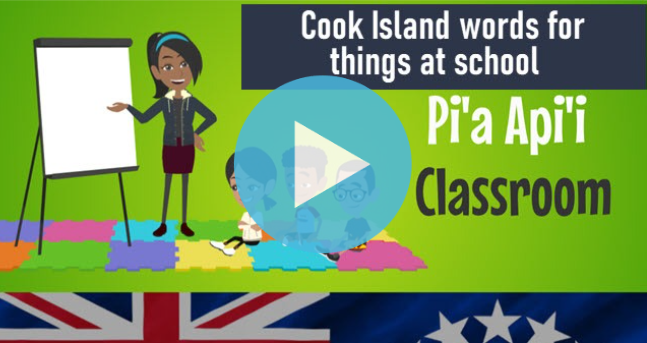
This video is great for our children, being able to use Cook Island words for things that we see at school can really support our children in their language journey. You can use words like ‘Peni’ instead of ‘Pen’, or ‘Puka’ instead of ‘Book’, and many more.
Api’i means School Pi’a Api’i means Classroom Peni means Pen Penisara means Pencil Poro means Ball Puka means Book Pepa means Paper Kete Api’i means School Bag Kaingakai means Table No’onga means Chair Ove means Bell Moenga means Mat Pu’api’i means Teacher Pu’api’i Maata means Principal Nga’i kangakanga means Playground Tamariki means Children Au Taeake means Friends Kaikai i te tuaero means Lunch
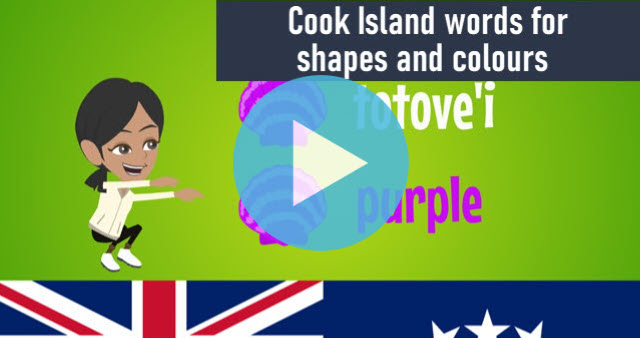
As we continue to deliver Cook Island language videos, we give you ‘Cook Island words for shapes and colours’.
When learning any language, it’s great to start with the basics. So, learning Cook Island words for shapes and colours is an excellent way to integrate these words into everyday conversations.
Use them in a sentence like ‘The sky this evening looks bright Makara’ or ‘Your necklace looks great, especially the Tatauro’.
We use cookies to enhance your experience while using our website. If you are using our Services via a browser you can restrict, block or remove cookies through your web browser settings. We also use content and scripts from third parties that may use tracking technologies. You can selectively provide your consent below to allow such third party embeds. For complete information about the cookies we use, data we collect and how we process them, please check our Privacy Policy




Recent Comments