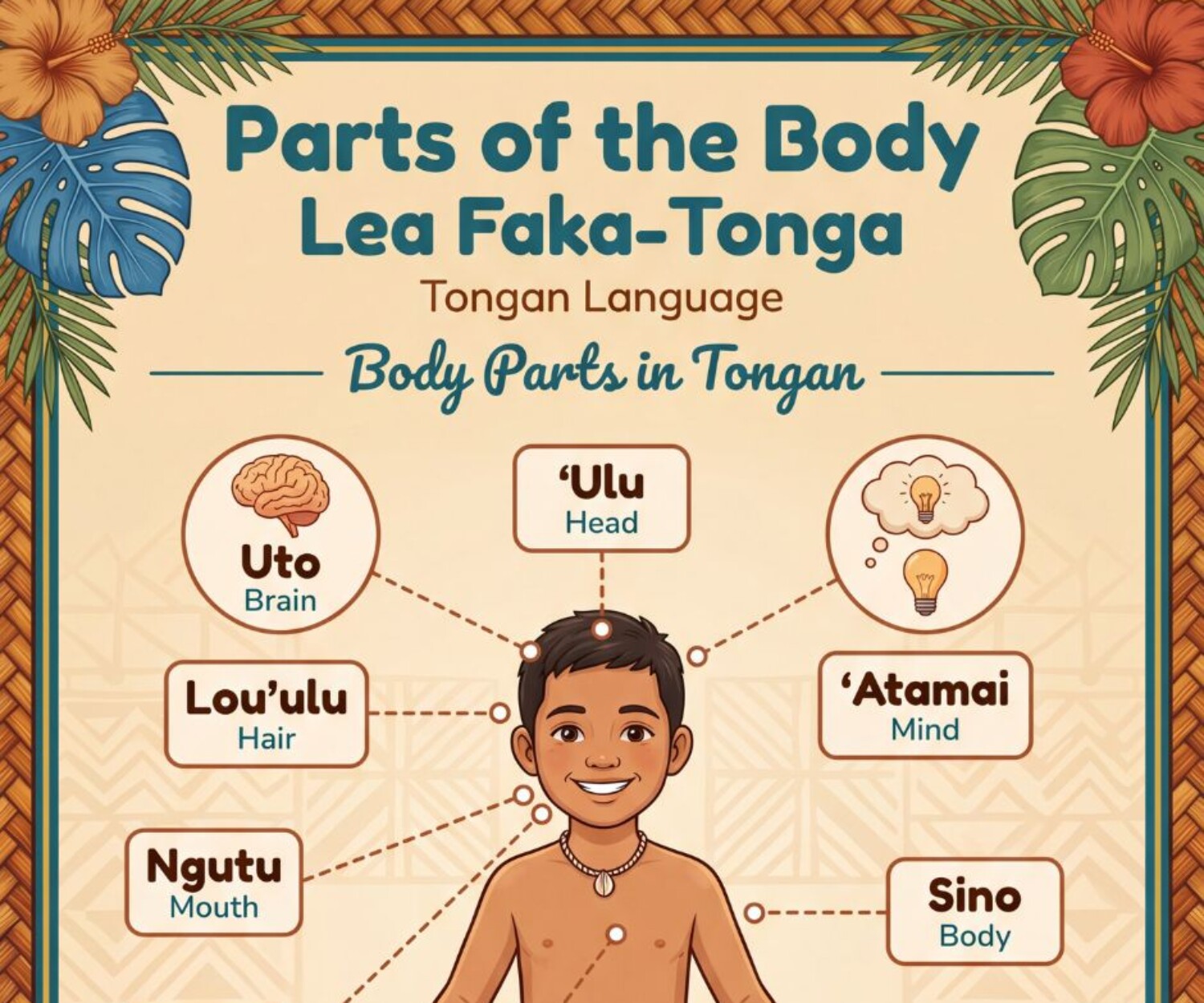
Fijian Words for Body Parts: Learn Essential Vocabulary in Vosa Vakaviti
Whether you are a beginner learning basic Fijian vocabulary or refreshing your knowledge, mastering body part words helps you speak more naturally and confidently.
Learn Fijian Words for Parts of the Body
Want to improve your Fijian language skills and build practical vocabulary you can use every day? Learning Fijian words for body parts is an essential step toward developing confidence and fluency in Vosa Vakaviti.
In this educational Fijian language video, we translate commonly used body part vocabulary from Fijian to English, helping learners connect language with real-world situations. Body part terms are especially useful in everyday conversations, health discussions, classroom settings, and cultural learning.
You will learn important Fijian words such as:
-
Yava – Leg
-
Uto – Heart
…and many more essential terms that strengthen your understanding and speaking ability.
Whether you are a beginner learning basic Fijian vocabulary or refreshing your knowledge, mastering body part words helps you speak more naturally and confidently. Watch the video, practise repeating the words, and continue growing your Fijian language journey.
If you would like to continue improving your Fijian language skills, visit our dedicated Fijian Language Video Page, where you will find additional videos, vocabulary lessons, and cultural learning materials.
Fijian Words for Body Parts
Below are common Fijian body part vocabulary words translated into English to help build your everyday language skills.
-
Ulu – Head
-
Yago – Body
-
Iqaqalo – Finger
-
Uto – Heart
-
Kete – Stomach
-
Sui – Bones
-
Na masela – Muscles
-
Yava – Leg
-
Tabana – Shoulder
-
Drauniulu – Hair
-
Liga – Hand
-
Yatevuso – Lungs
-
Gusu – Mouth
-
Mona – Brain
-
Bati – Tooth
-
Liga – Arm
Practising these common Fijian words for body parts will help improve your confidence and understanding of Vosa Vakaviti in everyday conversations. You can expand your vocabulary further by learning Fijian words for food and Fijian words for family, which are commonly used in everyday conversations.
How to Use Fijian Body Part Words in Everyday Conversations
Learning Fijian body part vocabulary is most effective when you can use the words naturally in everyday situations. In Vosa Vakaviti, body part terms are commonly used in conversations about health, movement, and daily activities.
Here are some simple examples of how these words are used in context:
-
Au sa mosi na uluqu – My head is sore
-
Kerea me laveta na ligana – Ask them to raise their hand
-
E mosi na yavaqu – My leg hurts
-
Raica na mataqu – Look at my eyes
Using these phrases helps reinforce your understanding of Fijian vocabulary while building confidence in real-life communication. Whether you are learning Fijian for school, cultural connection, or travel, practising full sentences is key to improving fluency.
Tips for Learning Fijian Vocabulary Faster
To improve your understanding of Fijian body parts and other vocabulary, try these simple learning strategies:
-
Practice daily – Repetition helps you remember new words more effectively
-
Use words in sentences – Don’t just memorise lists, apply them in context
-
Watch and listen – Use videos to hear correct pronunciation
-
Test yourself – Quizzes help reinforce learning and track progress
Consistent practice with vocabulary like body parts will help you build a strong foundation in the Fijian language and improve your ability to communicate naturally.

Take the Fijian Words for Body Parts Quiz
Taking the Fijian Words for Body Parts Quiz is a great way to stay engaged and check how much you remember.
Latest Pacific Learners News and Information
Stay up to date with the Latest Pacific Learners News and Information